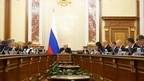
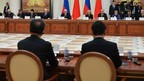
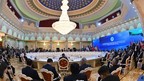
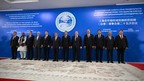
The meeting took place as part of the visit to Russia by Premier of the State Council of the People’s Republic of China Li Qiang.
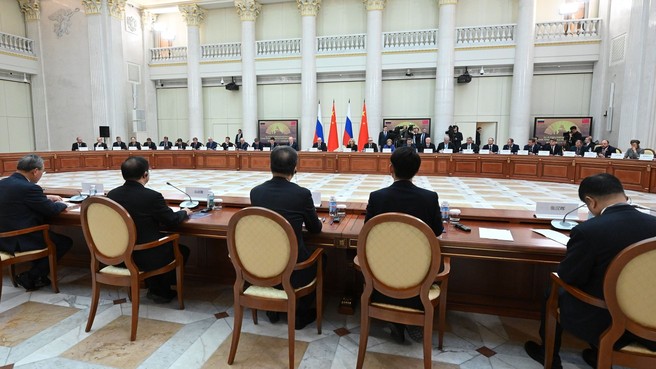
The 31st regular meeting of the heads of government of Russia and China
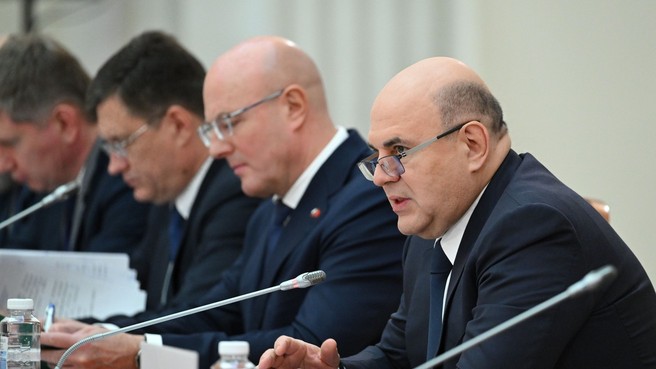
The 31st regular meeting of the heads of government of Russia and China
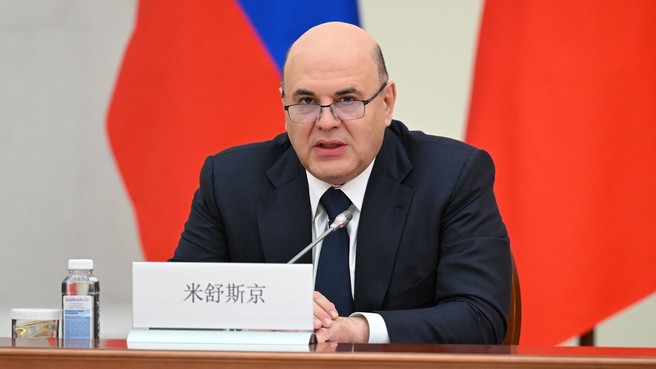
The 31st regular meeting of the heads of government of Russia and China
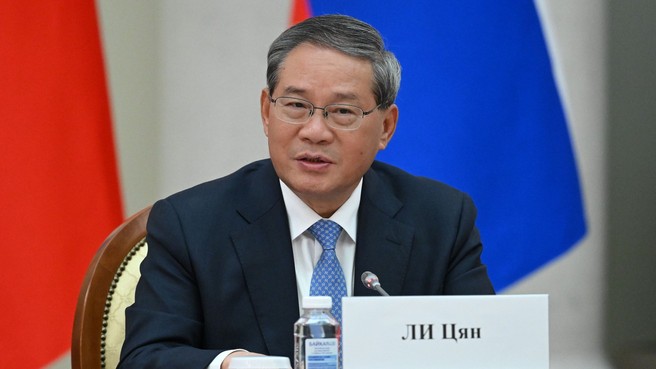
The 31st regular meeting of the heads of government of Russia and China. Premier of the State Council of the People’s Republic of China Li Qiang
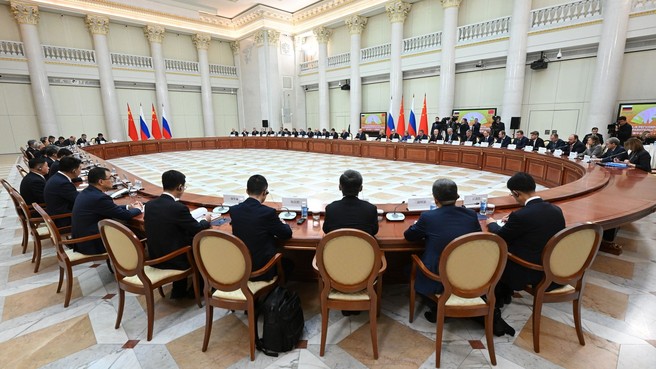
The 31st regular meeting of the heads of government of Russia and China
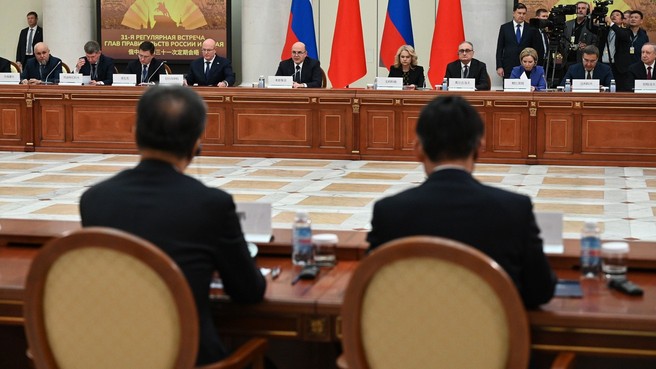
The 31st regular meeting of the heads of government of Russia and China
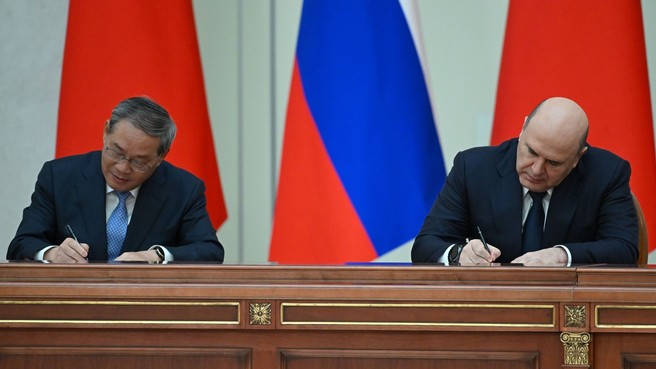
The signing ceremony for the Joint Communiqué following the 31st regular meeting of the heads of government of Russia and China
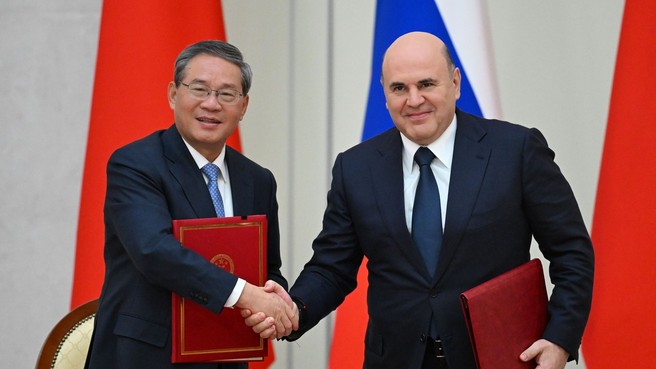
The signing ceremony for the Joint Communiqué following the 31st regular meeting of the heads of government of Russia and China
The 31st regular meeting of the heads of government of Russia and China
Excerpts
from the transcript:
Mikhail Mishustin: Mr Li Qiang, colleagues,
I would like to extend a sincere welcome to all our Chinese colleagues and friends here in hospitable St Petersburg for this regular, now 31st, meeting of the heads of government of Russia and China.
Thanks to the intensive dialogue at the highest level between President of the Russian Federation Vladimir Putin and President of the People’s Republic of China Xi Jinping, our bilateral relations are developing dynamically in the spirit of a comprehensive partnership and strategic interaction. The Treaty of Good-Neighbourliness, Friendship and Cooperation, the 25th anniversary of which we marked this year, provides the fundamental framework.
China is among Russia’s key foreign economic partners.
Bilateral trade is growing steadily, and settlements are now made predominantly in roubles and yuan.
The volume of bilateral investment is also rising steadily. The relevant commission’s portfolio already includes over 90 projects in a wide range of fields – from metallurgy to agriculture.
We expect their number to increase further, including through the implementation of the updated Agreement on the Promotion and Mutual Protection of Investments between Russia and China. It was signed last year and creates the most favourable conditions for business and mutual investment.
We are cooperating across a broad range of areas.
Russia firmly maintains its position as the leading exporter of oil and natural gas to the PRC.
The Power of Siberia gas pipeline is operating reliably. Construction of the Far Eastern route is well under way. The project to build the Power of Baikal pipeline is also being developed. It has the potential to become one of the largest gas arteries in Eurasia.
Joint initiatives in the peaceful use of nuclear energy are also moving forward, including the construction of power units using Russian technology at Chinese nuclear power plants.
We will continue to ensure reliable, uninterrupted supplies of energy resources and, more broadly, we are ready to step up cooperation in the entire energy sector.
There is considerable potential for expanding practical cooperation in agriculture. Agricultural trade in the first nine months of this year grew by more than a third compared with the same period in 2025.
Russian goods under the Made in Russia brand have demonstrated their high quality and are gaining popularity in China. The range of goods supplied bilaterally needs to be broadened. There is clear demand for this among the citizens of our two countries.
We are also paying close attention to strengthening transport connectivity. Our shared logistics framework comprises modern cross-border infrastructure, motorways, bridges, sea and river routes, and air links.
At this stage, we need to step up the modernisation of border crossing points, introduce digital technologies into rail transport, and develop new transport corridors. And, of course, we need to extend the geographical reach of air transport still further. All of this will contribute to the growth of freight volumes and trade overall, benefiting our national economies.
The cultural agenda occupies an important place in our relations. Our peoples feel genuine affection for one another and are eager to learn more about the history, traditions and contemporary art of both Russia and China. In the first half of the year, reciprocal tourist traffic grew by almost 50 percent.
We have established productive cooperation in healthcare, sport, culture and the film industry.
Events under the cross Years of Russian-Chinese Cooperation in Education, launched in May by President of Russia Vladimir Putin and President of the People’s Republic of China Xi Jinping, are continuing. This opens up unique opportunities for the joint training of highly skilled professionals for the future.
Scientists and innovators from Russia and China, for their part, are already working closely together. Among other things, they are actively conducting applied research and taking part in megascience projects, which enables us to develop our own technologies and expertise more effectively and enhance our competitiveness. I have no doubt that examples of such practical cooperation will become ever more numerous. Russia is always open to such dialogue.
Mr Li Qiang, colleagues,
Our joint work is aimed at fully realising the constructive potential of Russian-Chinese cooperation, creating new opportunities for the growth of trade and investment, and advancing major joint projects in industry, energy, high technology and the digital economy. And, most importantly, it is aimed at ensuring a prosperous life for the citizens of both Russia and China.
I am confident that today’s meeting will help us achieve this. It will enable us to define the parameters of cooperation at the government level to fulfill the tasks set by our leaders –President of Russia Vladimir Putin and President of the People’s Republic of China Xi Jinping.
Mr Li Qiang, thank you for your attention. I now invite you to take the floor.
Li Qiang (via interpreter): Mr Mishustin,
Russian friends,
I am delighted to be in the beautiful city of St Petersburg, where Prime Minister Mishustin and I are co-chairing the 31st regular meeting of the heads of government of China and Russia. After the previous meeting, our commissions, subcommissions and working groups focused their attention on the implementation of the agreements reached between our leaders and instructions issued following our 30th meeting. They stepped up their work across abroad range of spheres and carried out thorough preparations for this meeting. I would like to express our gratitude to all agencies and industries of our countries for their hard work.
Mr Prime Minister, I would like to thank you and our Russian colleagues for a thorough organisation of this meeting.
This year marks the 30th anniversary of the establishment of the strategic partnership of coordination between our countries and the 25th anniversary of the Treaty of Good-Neighbourliness, Friendship and Cooperation. There have been shifts in the international situation over the past decades, but our striving for good-neighbourliness, friendship, cooperation and development has not changed. We remain committed to the principle of non-alignment, non-confrontation and non-targeting of this countries, and we continue strengthening the spirit of mutual respect and mutually beneficial cooperation.
We are fostering our cooperation aimed at achieving comprehensive results. We have created a model example of high-quality collaboration and high-level mutual trust between our major powers and neighbouring countries.
We are moving forward in perfect harmony, side by side and hand in hand, especially in a challenging international situation of the past few years, responding to external instability and uncertainty by more energetically strengthening our cooperation. The scope of our cooperation is expanding, and our steps are becoming ever more stable.
Over the first few months of this year, our trade has exceeded $180 billion, growing by 28.4 percent compared to the same period last year
Our investment cooperation is improving as well. We are successfully collaborating in energy, aviation, space exploration, logistics and transport.
Our Cross Years of Cooperation in Education will be launched this year. Our humanitarian and interregional cooperation is growing rapidly, producing positive results and tangible benefits for our nations.
Under the strategic guidance of President Xi Jinping and President Vladimir Putin, the Chinese-Russian relations have entered a new phase of more productive, tangible and accelerated development. We must use this meeting as a good opportunity for comprehensively reviewing our performance and addressing challenges bottlenecks in our cooperation. We must find a way to effectively translate the agreements reached at the highest level into practical actions and tangible results, so as to better serve the cause of our countries’ revival and prosperity for the benefit of our peoples.