The Prime Minister addressed the plenary session, Navigator for Russia’s Agro-Industrial Sector: Technologies behind Effective Growth, and presented state awards to agricultural workers.
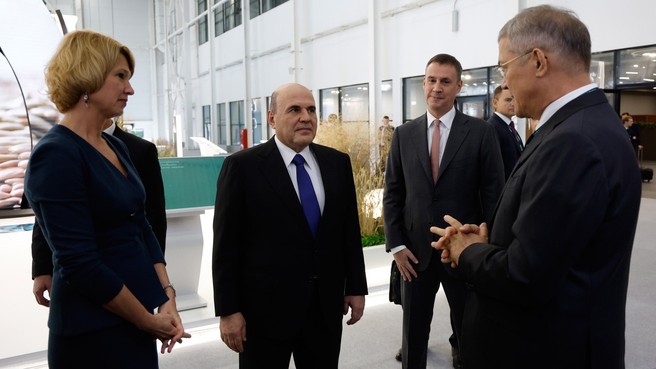
Mikhail Mishustin tours the Golden Autumn 2026 agro-industrial exhibition. With Dmitry Patrushev and Agriculture Minister Oksana Lut
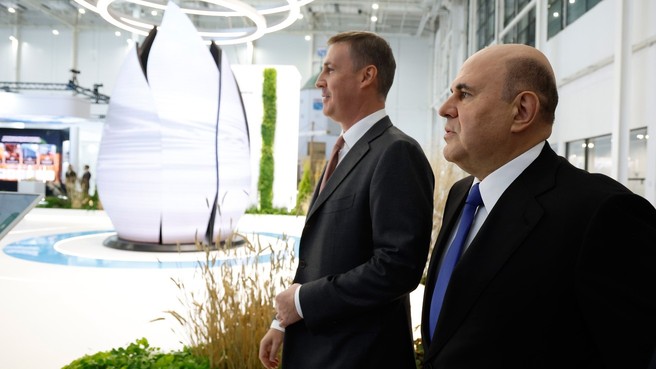
Mikhail Mishustin tours the Golden Autumn 2026 agro-industrial exhibition. With Dmitry Patrushev
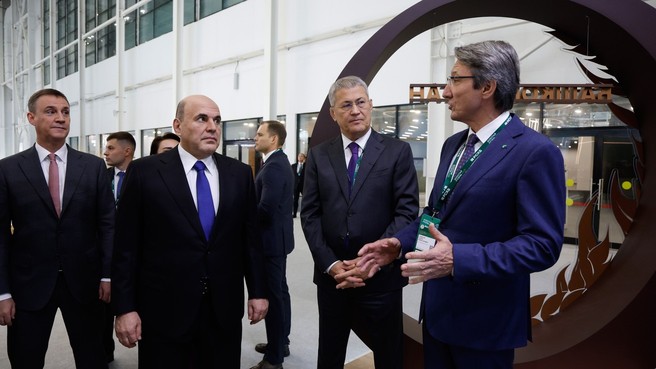
Mikhail Mishustin tours the Golden Autumn 2026 agro-industrial exhibition. With Dmitry Patrushev
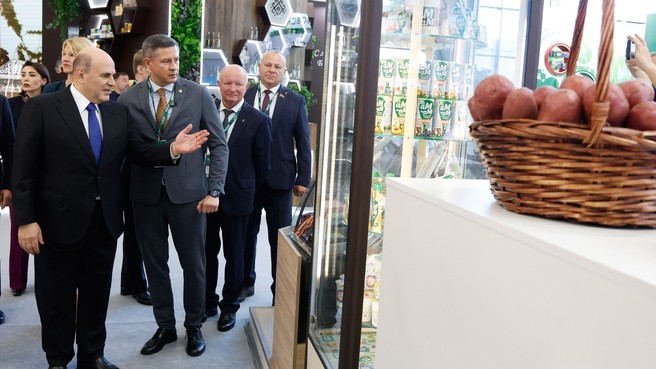
Mikhail Mishustin tours the Golden Autumn 2026 agro-industrial exhibition. With Bryansk Region Governor Yegor Kovalchuk
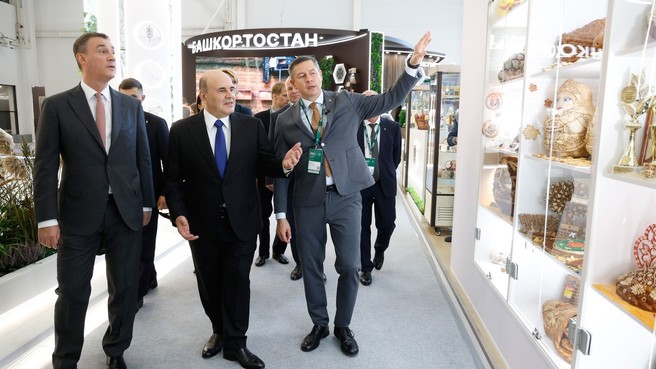
Mikhail Mishustin tours the Golden Autumn 2026 agro-industrial exhibition. With Dmitry Patrushev and Bryansk Region Governor Yegor Kovalchuk
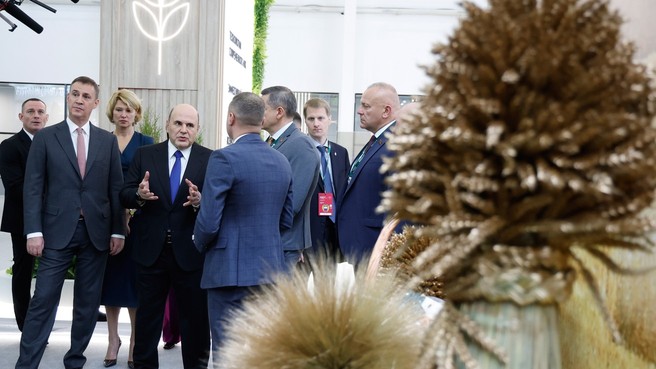
Mikhail Mishustin tours the Golden Autumn 2026 agro-industrial exhibition. With Dmitry Patrushev, Agriculture Minister Oksana Lut
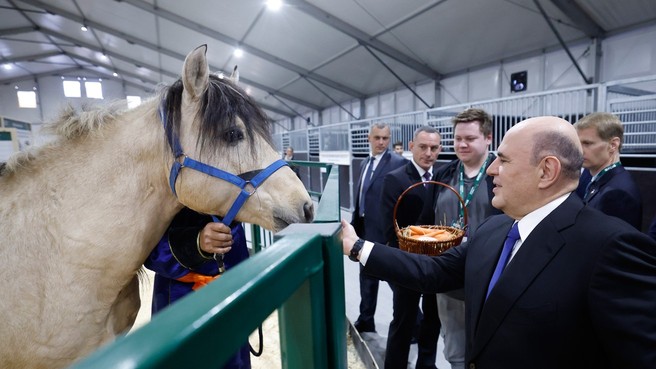
Mikhail Mishustin tours the Golden Autumn 2026 agro-industrial exhibition
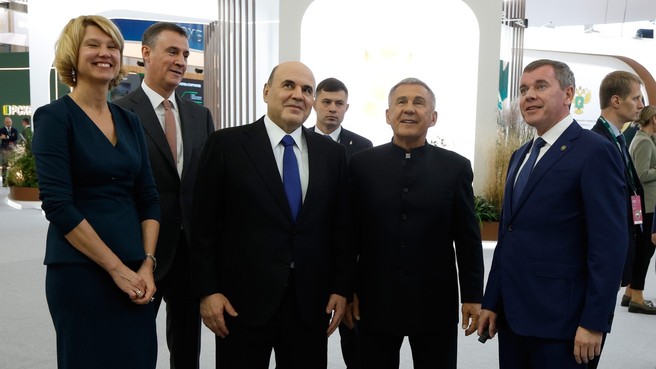
Mikhail Mishustin tours the Golden Autumn 2026 agro-industrial exhibition. With Dmitry Patrushev, Agriculture Minister Oksana Lut, and Head of the Republic of Tatarstan Rustam Minnikhanov
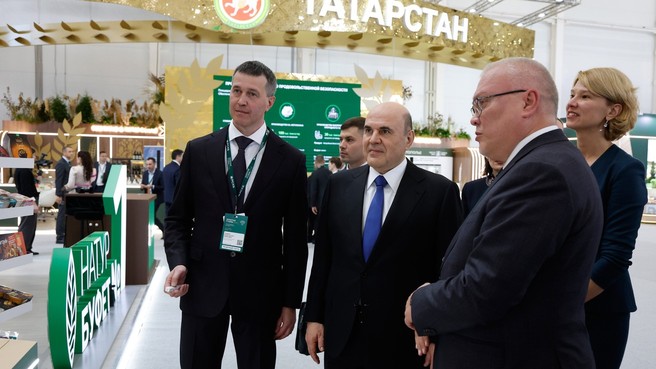
Mikhail Mishustin tours the Golden Autumn 2026 agro-industrial exhibition. With Agriculture Minister Oksana Lut
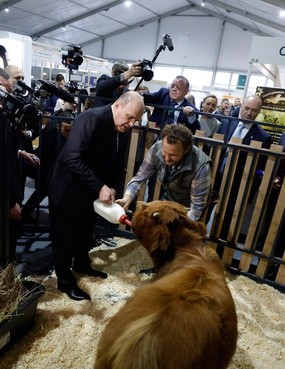
Mikhail Mishustin tours the Golden Autumn 2026 agro-industrial exhibition
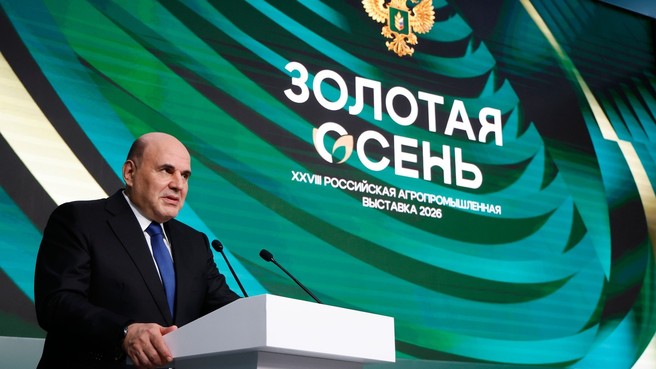
Mikhail Mishustin’s remarks at a state awards ceremony
Mikhail Mishustin tours the Golden Autumn 2026 agro-industrial exhibition. With Dmitry Patrushev and Agriculture Minister Oksana Lut
Mikhail Mishustin’s remarks at the plenary session:
Good afternoon, everyone.
I would like to welcome the participants and guests of the 28th Golden Autumn exhibition.
Everyone in this audience is actively involved in the agro-industrial sector. So, first of all, I would like to wish you a happy upcoming professional holiday. This Sunday will mark Agriculture and Food Processing Industry Workers’ Day.
Your efforts help stock grocery stores with high-quality food. Thank you for your hard work, your dedication to what you do, and your care for our country. After all, agricultural workers ensure Russia’s food security.
I would like to take a moment to discuss the state of agriculture.
We need to wait a little longer for the final results of the harvest campaign. However, more wheat, rapeseed, and fruits have been harvested than last year. Fish farming and pork and egg production have seen growth as well.
According to preliminary estimates, the Food Security Doctrine is being implemented just as consistently as it was last year. The domestic market supplies will be coming along without disruptions.
There has been progress in other areas of the agro-industrial complex as well. More insurance contracts have been concluded, helping agricultural businesses mitigate their risks.
The transformation of rural areas is underway as well. Over five-plus years since this programme was launched, living conditions have improved for hundreds of thousands of families. Thousands of social, utility and transport infrastructure facilities have been renovated, upgraded, or newly built. The Government will continue to improve the quality of life in rural areas.
The agricultural businesses in the reunited regions are also showing excellent growth.
Additional support is being provided to farms in the Donetsk and Lugansk people’s republics and in the Zaporozhye and Kherson regions. The Donetsk People’s Republic, which is represented at the exhibition, has harvested a substantial grain crop.
This season, agricultural businesses are operating in a challenging environment marked by fuel shortages and cargo logistics difficulties.
The President supported the initiative to assist agricultural producers with grain sales, including a decision to purchase grain for the state reserve.
The Government has taken a number of measures, primarily, allocated additional subsidies for rail freight to offset disruptions to shipping in the Sea of Azov and Black Sea basin.
At a Government meeting today, we will discuss providing funding to agricultural producers in Crimea. A state of emergency has been declared in the region, and its agro-industrial sector needs serious help. We will allocate more than 1.5 billion roubles to support the sector. The funds will be used to support poultry farming and fruit production, as well as agricultural operations
We will consider extending agricultural loans for up to one year soon.
If they operate in the regions that grow significant volumes of grain, they will be eligible to extend their low-cost short-term loans.
The same opportunity should be provided to agricultural businesses that have suffered significant losses as a result of a man-made emergency due to restrictions on the production, sale and transport of agricultural products.
In addition, we will let borrowers restore the subsidised interest rate on short-term loans they took out after January 1, 2025.
Agricultural producers and processors in many regions of our country will also be eligible for additional support measures.
This approach will not only ease the burden on the sector, but also make it possible to start preparing for next year’s sowing campaign. This, in turn, will help stabilise the operations of agricultural businesses and help them overcome the existing difficulties more quickly, including meeting commitments to their foreign partners. As of late September, agricultural exports had increased by over 15 percent, confirming the strong global demand for Russian products and agricultural raw materials.
A year ago, we launched a national project on technological support for food security to improve the agricultural sector’s competitiveness, and it has produced excellent results. As you may be aware, the level of self-sufficiency in this area has increased by 12 percent, with positive dynamics across all key areas.
The use of domestic seeds is growing rapidly, particularly for crops where our dependence on foreign breeding programmes used to be very high. These include sunflower, rapeseed, sugar beet, as well as soybeans and corn. Overall, our seed self-sufficiency rate is nearly 70 percent. To accelerate this process, a dedicated platform has been established at the Timiryazev Genomic Centre that will reduce the time needed to bring new varieties and hybrids to market to two or three years. It is already being widely used by many research institutions. The Golden Autumn exhibition features some of the achievements made possible by this work in Bashkortostan, among others. We discussed this today at the Bashkortostan booth.
There have also been significant results in livestock production, including in improving genetic potential and increasing feed efficiency.
Wide-ranging efforts are under way to expand the production of critical enzyme preparations, feed additives, and other processing aids. Large-scale biotech production facilities are being built in Tatarstan and the Belgorod, Voronezh, Moscow, Tula, and Yaroslavl regions.
We are making investment in upgrading the scientific infrastructure as well. Over the past two years, four laboratories specialising in enzymes, starches, and dairy starter cultures have been retrofitted. New veterinary medicines will also be developed in eight more refurbished laboratories.
There have also been tangible results in upgrading agricultural machinery and equipment. This year, the first Russian breeding combine harvester was introduced. We saw it today; it’s on display at the exhibition, along with a number of other compelling pieces of equipment that were created, among other things, in conjunction with our Belarusian partners. We discussed this cooperation at INNOPROM in Minsk last week.
Work is continuing to move agricultural services online in order to improve the efficiency of the sector.
All these measures, supported as part of the new national project, are very important for the agricultural sector, primarily because they are aimed at developing domestic production using our own raw materials, which will make it possible to expand the output of higher-value-added products for domestic and international markets.
Workforce training is another area of our work that I believe needs to be highlighted here, within the walls of Timiryazev University, which is one of the country’s leading agricultural universities. We are putting in place an education model based on the school-to-workplace principle. Around 2,000 agricultural technology classes have been opened in 81 regions for children and teenagers to learn about career opportunities at an early age.
We are also updating secondary and higher education programmes that train specialists for the sector. More and more students are signing agreements for targeted education and internships at agricultural enterprises, enabling them to decide in advance on their workplace following graduation. This year, there will be more than 9,000 such students.
We pay special attention to teaching staff. They receive incentive payments, housing, and opportunities for professional development. We need the future development of agricultural research and education to go hand in hand with the industry. This approach will help bring research developments through to the production of competitive goods and, importantly, train specialists who are proficient in the latest technologies and highly sought after in the labour market.
Colleagues,
We have a great deal of work ahead of us in order to implement the tasks set by our President. The head of state said that we need to ensure that our entire country from Kaliningrad to Vladivostok is proud of and uses products and technologies that are made in Russia. The achievements of the agro-industrial sector in this regard are significant. Grocery shoppers are increasingly choosing domestic producers which places great responsibility on the entire sector. I am confident that you will continue to do everything possible to ensure the successful development of our agricultural sector.
Thank you all once again. My best wishes on the upcoming holiday, and I also wish the forum participants a productive event.
Thank you, friends.