Agenda: results of the meetings of the Council of Ministers of the Union State and the Eurasian Intergovernmental Council; participation in the Innoprom. Belarus international industrial exhibition; the bioeconomy development strategy; and the reduction of the Belgorod Region’s budget debt.
Meeting with deputy prime ministers on current issues
Meeting with deputy prime ministers on current issues
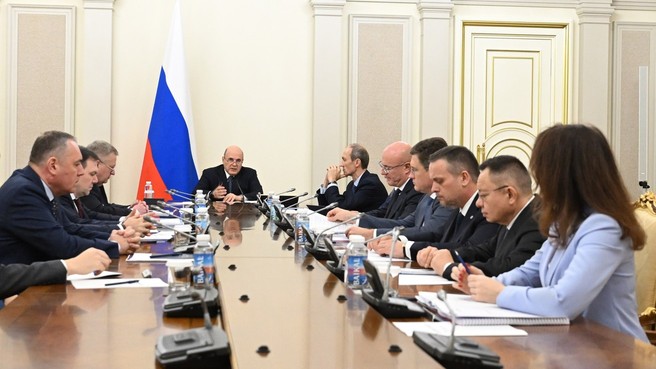
Meeting with deputy prime ministers on current issues
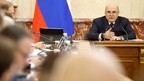
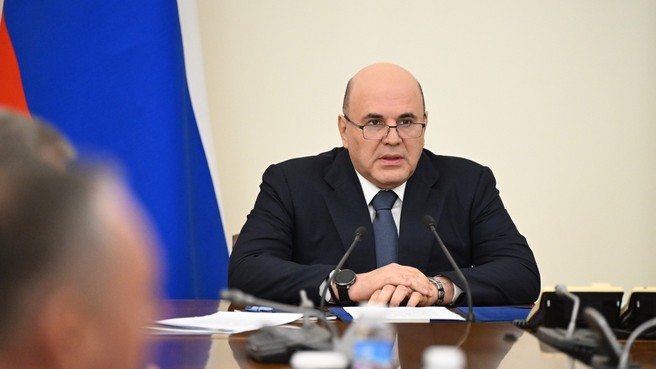
Mikhail Mishustin’s opening remarks:
Good afternoon, colleagues,
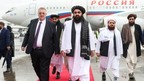
Last week, I made a working visit to Belarus. Together with the heads of government of friendly countries, we took part in the Innoprom. Belarus international industrial exhibition. At the plenary session, we discussed the development of industrial cooperation, a crucial factor in strengthening our national economies. We also viewed cutting-edge industrial solutions and technologies, some of which were developed through the joint efforts of our engineers, innovators and technical specialists.
I co-chaired a meeting of the Council of Ministers of the Union State with Prime Minister of Belarus Alexander Turchin. We reviewed the progress in implementing the integration objectives set by our presidents. We also coordinated our efforts on joint scientific and technical programmes, transport projects and initiatives to support young people. We will continue to expand our cooperation and launch new practical initiatives aimed at improving the quality of life of the people of Russia and Belarus.
Minsk also hosted a meeting of the Eurasian Intergovernmental Council, the third such meeting this year. We held substantive discussions on further steps to develop key economic sectors and updated the list of priority integration projects, particularly in the transport and logistics sector. We also agreed to accelerate the implementation of electronic document management at seaports to increase freight volumes.
In order to ensure food security, we approved joint forecasts for the development of the agricultural sector, as well as supply-and-demand balances.
We also focused on establishing the Union’s common electricity market. The necessary amendments were introduced to the rules governing information exchange among market participants, mutual electricity trade and the allocation of cross-border transmission capacity.
Other agreements were also reached. Colleagues, please closely monitor their implementation within your respective areas of responsibility.
Integration within the framework of the Union State and the Eurasian Economic Union offers clear benefits to all participants. Naturally, we must make full use of all the advantages and opportunities presented by this format of cooperation.
The next item on the agenda concerns the development of the bioeconomy. The President has emphasised that this sector is of crucial importance for strengthening Russia’s industrial and technological sovereignty and environmental security, while also creating new opportunities for agriculture, healthcare and other sectors of the economy.
To promote domestic solutions in this field, the Government is implementing a comprehensive set of measures under a dedicated national project designed to accelerate the practical application of research findings and the latest advances in biology. In line with the President’s instructions, a Bioeconomy Development Strategy has been approved. It sets out priority areas for the application of these technologies over the next decade and beyond and provides for creating favourable conditions for companies developing and manufacturing innovative products based on biological resources and living microorganisms. These products are intended for use in agriculture, medicine, veterinary science, energy, the utilities sector and environmental protection. They include new materials, fuels, fertilisers and feed additives, as well as pharmaceuticals and medical devices.
To this end, we plan to significantly expand the scientific infrastructure, including by establishing more technology parks, design bureaus and testing facilities, so that developers have a genuine opportunity to put even their boldest ideas to the test. The network of test benches will also be expanded. We also need to accelerate fundamental research and improve its effectiveness by making greater use of modern computing systems and artificial intelligence.
Particular attention will be given to training highly qualified specialists – scientists, bioengineers, process engineers and chemists. It is their expertise and skills that will enable us to address the most pressing challenges and find solutions to critical issues ranging from food security to climate change.
I would like to ask Mr Manturov to personally oversee the preparation of the action plan for implementing this strategy.
One more issue concerns support for the regions of the Russian Federation. At the President’s initiative, they can have their debt to the federal budget reduced by two-thirds to redirect the funds towards strengthening their development potential, including upgrading roads and public transport, renovating apartment buildings and utility infrastructure, and modernising key settlements and local enterprises.
This mechanism has proved effective over the past two years, making it possible to channel hundreds of billions of roubles into projects that are particularly important to local communities. This directly contributes to improving people’s quality of life and advancing the national development goals set by the President.
The Belgorod Region will also make use of this debt reduction mechanism. In addition, we will allocate nearly 3 billion roubles to one of the region’s key priorities – supporting participants in the special military operation and their families.
The Government will continue to help the regions reduce their budget debt.
Colleagues, it is essential that you closely and continuously monitor the financial situation in the regions of the federal districts under your supervision.